
WordPress Web 2.0

Advanced Web Technologies Individual Project

Advanced Web Technologies / IT470

Written by Kristi Divin / 8-16-2021

Table of Contents

Week 1. 3

  • Project Outline & Requirements
  • Web 2.0 Strategies
  • Web Portal Plan

Week 2. 6

  • Collaboration Plan
  • Social Networking Plan

Week 3. 10

  • Search Engine Optimization Plan
  • SEO Web Pages (In Zipped File)

Week 4. 12

  • Data Aggregation Plan
  • Mashup Plan

Week 5. 15

  • Web Server Performance & Security
  • Web 2.0 Implementation Plan Final Version

“Web 2.0 is the business revolution in the computer industry caused by the move to the Internet as platform, and an attempt to understand the rules for success on that new platform.”

-Tim O’ Reilly

“Technology is best when it brings people together.”

-Matt Mullenweg Founder, WordPress

WordPress is a social platform and blogging host that I have been passionate about for the last two years now, which is why I have chosen to utilize it for this research project. In addition to this, I am hoping that I will be able to learn the platform a bit more through finding out what it is capable of and where it is lacking.

          While WordPress may not have physical products or locations, that I am aware of, there are certain levels of services that this host offers to all users including the ability to choose a domain or subdomain name, upgrading possibilities, customization of your websites, templates to help you get started, color schemes, and more!

          After finally diving into the WordPress menu fully, I decided it would be the best to start investigating web 2.0 features and tools that it has yet to utilize and pick from the pool! If you look to the right side of this page you will see a quote that was stated by Tim O’Reilly; it was on the blog holding this quote that I found the features I later decided suitable for a host such as WordPress.

          Figure 1.1 is a chart credited to a blog article written by Lipika in 2016, and this article is important to my research because it lists the basic web 2.0 tools that a web 2.0 technology or platform should contain to be labeled as such. Oddly enough, even with everything WordPress is already capable of, the top row of tools is missing to some degree of which I will explain within the next few paragraphs.

Common Web 2.0 Features & Tools

  1. Profiles—while the chances to upgrade, update, and customize your website are virtually endless, the option of building an individual profile is absent. To learn this is a bit discouraging for me, because blogging is all about a person’s passions in life.
  2. Blogging—this is the one area out of this group I would leave alone because platform is based on, the ability to blog, comment on blogs, and create sites for blogging.
  3. Groups—while you can view bloggers by the hundreds, I have not found an option to search for groups. So far the only thing that has come close this is the option to place blog entries under certain tags which then lets that entry appear in suggestion to similar bloggers.
  4. Micro Blogs—when I hear this term I think of blogs that would only go to a certain length, number of words, or possibly only to a certain amount of detail. From what I can tell, there is no such option available on WordPress.
  5. Wiki—There are a few different ways a company could go with this faction. I would like to see Wikipedia and WordPress collaborate a bit, whether that be when it comes to categorizing blogs or users or Wikipedia having a miniature glossary of related blog articles at the bottom of each new entry.
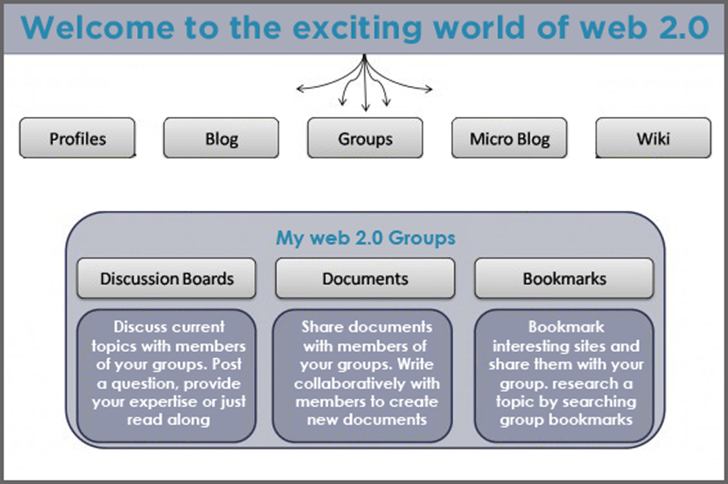
Figure 1.1

Benefits to the Additions

If nothing else, WordPress would gain many more capabilities from adding these few features or updating the ones already there that I may have not discovered yet! Just imagine a digital book club that gave users the option to go behind the scenes with every author who’s work they read at any given time; that scenario perfectly describes the benefits of adding each of the mentioned features.

WordPress Web Portal

Building an efficient web portal can be a tricky situation, no matter what the uses will be! Given this particular need and company, the web portal would have to be based on a blogger needs from upgrade capability to trendy website templates to useful and user-friendly plug-ins of all kinds! Keep reading for a specific list.

  1. Login form accommodated with the originating website.
  2. Desktop & mobile – friendly designs.
  3. Website’s dashboard that shows all active and non-active websites.
  4. Settings
  5. Camera
  6. New entry button that would lead to your entry dashboard.
  7. Audio, if applicable, for broadcasting live.
  8. Video, if applicable, for broadcasting live.
  9. Customer support/service.
  10. Help button for questions or bugs within the application.

COLLABORATION PLAN

Being that WordPress is basically a collaborator’s playground I had a bit of difficulty coming up with an efficient collaboration plan; that is until I started looking into the collaboration plugins that already exists, which is when I found two significant issues with WordPress collaboration. The first of which being the bloggers with a free WordPress plan have no access to collaboration tools at all! I do not find this fair because how does someone put a group of friends and family together for a family – centered blog if they have no collaboration tool to do so. Secondly, there are no Google collaboration tools in WordPress’s list of collaboration plugins. Google is one of the biggest platforms in the world from every angle and offers every type of tool a user can imagine, so it is silly that WordPress wouldn’t take advantage of that. With all this in mind, I decided it best to make a chart to show three common areas within WordPress in which free plans and Google Docs would benefit!

 Free WordPress PlanGoogle Docs
EfficiencyThe dictionary definition is preventing wastes, whether that be land waste, wasting time, or wasting materials! When an account is not able to maximize the use of the host’s tools, time is being wasted in the creation of an elaborate blog I am sorry to say. However, if WordPress were to allow the free accounts a little use of the collaboration tools, even if only a free trial, then the users would be more likely to stay and possibly upgrade their plan later!If WordPress were to embed a free plugin for Google Docs, the sky would be the limit for free plan users! They would be able to show off schoolwork, business presentations, individual documents, graphic designs, and so much more to friends and family. The best part is they would be able to do all of this through their WordPress blog!
User – FriendlyTo open free plans up to free trials for different tools would make WordPress a lot more user – friendly, and in the long run, would likely mean more upgraded accounts! As it is right now, there is little to nothing users can do with collaboration aside from tagging the entries so other similar bloggers can see and comment on them.Google Docs literally has user – friendly all over it! There are tours within the platform, instruction videos on YouTube, and contact information for a support team if a user has questions about how to use the application. The only thing Google to do to make this application more user – friendly is reaching out to social media platforms like WordPress and collaborating on plugins from one to the other and vice versa.
TrafficFree WordPress would see huge traffic increases if they were allowed a little more freedom with the collaboration tools, because it would be much easier to share what they spend so much time working on.WordPress would also see a traffic boost if they chose to implement Google Docs, because it would make collaboration a lot easier from WordPress to Facebook, Instagram, LinkedIn, Twitter, and more!

Being that Google does not charge to provide services, and WordPress would be working with free accounts and free trials, this whole idea would literally cost nothing but time to implement! WordPress has been very well established for years, and do not need updates very often, so they do not have much to lose with considering this for a future update, at least in my opinion!

Impact of social networking

Social networking can be extremely beneficial to almost any business if used appropriately, unfortunately though, too many people utilize social networks and platforms with malicious intent! Generally speaking, there are a few major areas that social networking tends to impact the strongest when it comes to a business setting: businesses in general, web users that interact with them, IT support staff, and IT management.

  1. When dealing with an online – based businesses  like WordPress, Flickr, Facebook, or Pinterest each platform is going to rely heavily on social networking because it is the platform users that make sure the business stays up and running through use of upgrades to the account which bring traffic to the company. However, if the platforms are used maliciously and the attackers are not exposed, then the company could be looking at severe, long – term recovery!
  2. The second most important factor in a business is the user that interacts with it, whether that be a customer or staff member. Social networking can impact either side of the screen positively or negatively. When staff members hack into a WordPress account from a company computer it makes the entire company look very suspicious, and they are usually investigated for a while after the incident. However, if social networks are used to advertise for the company in a positive light, more users are drawn in by word of mouth!
  3. Another factor that would be heavily impacted by social networking, usually the front lines of the impact, is the IT support team. If there is ever a technical complaint or issues with another WordPress user, the support team is going to hear about it first. However, they are also the ones that deal with recommendations, praise, and compliments. I guess one could say then that they deal with the best and worst of both worlds.
  4. Finally, there is the IT support management team, which is usually considered the backbone of the business. When the time comes that a support staff member can not deal with an irate customer, management steps in. When support staff does not know the answer to a given question, management steps in. On the lighter side of things though, they also grant promotional raises, raises in company positions, and transferal recommendations when needed!

Social Networking Benefits

Highlighted above, you see 3 terms that are well – known within the business world: recommendations, word – of – mouth, and traffic! These three terms are huge benefits that stem from social networking, because it is the word – of – mouth recommendations that bring traffic, in large part, to both online and physical – based businesses of any given type.

Potential issues

The biggest potential issue I can think of, especially for an online business, is a security breech. Usually this takes place when hackers find their way into company computers and steal the credentials of customers, staff members, or management! This is super dangerous because if the gathered information ends up in the wrong hands, the victim may end up in a world of trauma! Other potential issues may be theft of credit card information, social security numbers, bank information, company information, and much more!

SEARCH ENGINE OPTIMIZATION PLAN

When planning for SEO, it is important to really think about what type of company it is that you are working with, for example WordPress was designed for bloggers and marketing. You can create online stores and blogs of just about anything your heart desires, but you have to make the theme blend so that it is not off putting to anyone that visits your sight! With that said, there are three main SEO tactics that I love to use when it comes to blogging: support content, social media marketing, and entry tags for reaching out to similar bloggers. Out of the 3 SEO tools mentioned here, it’s nearly impossible to say which one works best since all three operate best when they are used together! All three of these tactics when used in a bundle make a very powerful marketing strategy and are guaranteed to bring more traffic, increase customer loyalty, and will likely have the customers stopping in regularly for purchases as well!

WEB CONTENT ACCESSIBILITY GUIDELINES (WCAG)

WCAG is a legal requirement for each webpage or website designed, and one that I can see that would be easily overlooked. However, it’s a legal practice to follow and consists of four base factions: perceivable, operable, understandable, and robust. According to W3Schools, each of these factions have their own little checklists that websites must follow for everything to run smoothly, look at the chart below for further information.

 PerceivableOperableUnderstandableRobust
 Non – text entities must have text alternatives provided!Keyboards should be capable of all functionalities.Content must be readable and easy to understand.Maximize compatibility!
 Provide alternatives for timed media, such as simple photos.Make sure enough time is allotted for users to view and read content.Webpages must appear and operate in predictable ways. 
 Include content that can be displayed in different ways.Be aware of possible seizures when designing content.Help visitors avoid / correct any mistakes and errors. 
 Separate foreground and background to increase visibility and sound.Design for easy navigation and finding content.  

DATA AGGREGATION PLAN

By definition, aggregate data refers to high – level data acquired by combining individual – level data. “For instance, the output of an industry is an aggregate of the firms’ individual outputs within that industry. Aggregate data are applied in statistics, data warehouses, and in economics.” (Wikipedia, 2021)

There are various types of aggregate data you may see within a business, and honestly it is a little overwhelming, so I decided to go with data types I am already familiar with.

  • SQL – While it may not always be the easiest data type to work with, SQL is considered aggregate data because it is individual pieces of information, and it serves as its own database most of the time.

Aggregate SQL Sample

  • Microsoft Excel – Although similar in appearance, SQL tends to be more numerical, while Excel often has non-numerical characters that come into play such as names, addresses, colors, shapes, and so on. Still, because of the individualized nature it is considered aggregate data.

Aggregate Excel Sample

  • A common, aggregate variable used today is Sum which is generally found in spreadsheets and is usually seen to be numerical as well. The picture below shows a subtotal sum for different units in a spreadsheet.

Aggregate Sum Sample

  • Dates are also types of aggregate data, and as with the others it is the simplistic nature that classifies it as such. Below is a visual that demonstrates how to sum values between two dates.

With investigating each data type I discovered one vital use for all of them when thinking on a website such as WordPress, which is tracking. These four types of aggregate data could be used to track just about anything a user would need, from site visitors to post clicks, and comment quantity to entry dates! Another common factor among the four data types is a spreadsheet being used to display the data. Displaying a spreadsheet is one of the easiest tasks in web development because there are so many ways to go about it, but the fastest and most efficient way I have found is creating a Microsoft Excel document, taking a screenshot, and displaying it as an image within the webpage!

MASHUP PLAN

The mashup plan I decided to go with is a script designed with Python. Python is an older scripting language still used today, and I find it a lot less overwhelming than Java or JavaScript. The sample you will see in the zip file, when ran, produces a sum of the x and y variables. What I love about python though, is you are able to stretch, customize, and expand it nearly anyway that fits your vision and there are hundreds of different variables, characters, and formulas you can use!

Security & Optimization

I have always kept two rules close when it comes to securing and optimizing anything digital! Rule number one is keeping security up to date by all means necessary! The second rule is to use a third party that you know well and trust to do so. Since 2018, there are two companies I have utilized more often than pretty much all others, and they are Microsoft and Google; both of which have tight security plugins if you feel it is needed.

The main component of security when considering Microsoft is top – of – the – line antiviral protection. The software is known as Microsoft Security Essentials and has been around and in use almost as long as Microsoft has. However, as far as optimization is concerned, there is a popular application among Microsoft users even though it isn’t directly led by Microsoft which is called SentryOne. SentryOne has capabilities to track and optimize the performance of multiple database applications, which is what makes it such an asset to users and business owners.

While Google may have the upper hand with security and optimization features, it is Microsoft I put more trust in, because it seems to suit my needs a little better and is updated a bit more frequently!

URBAN ENTERPRISE APPLICATION UI

Written by Kristi Divin / Colorado Technical University – Online

Course – CS347 / Instructor Cheryl Frederick

Table of Contents

Cover – 1

Table of Contents – 2

Project Outline – 2

Phase 1 – 3

1. User Interface Functional & Technical Requirements

2. User Interface Human Interaction Requirements

Phase 2 – 5

1. User Interface Design Prototypes

Phase 3 – 8

1. Usability Test Questionnaire

2. Usability Test Instruction Guide

Phase 4 – 12

1. Usability Test Results

2. Itemization of Changes

Phase 5 – 12

1. Final User Interface Design

Project Introduction

Within the introduction of this research project, you will find a cover page with the student and course information, as well as a page that contains the table of contents in a simplified version, and finally a project outline that goes into more detail on what will take place with progression of the project!

Project Phases

Phase 1

This phase will contain the functional and technical requirements that must be met with the development of a web application such as processors, memory, and display capabilities. Requirements for human interaction will also be discussed!

Phase 2

Physical sketches, diagrams, and paper interfaces will be explored when deciding which prototype to utilize for the research project.

Phase 3

In this phase a questionnaire will be launched along with an instruction guide on which areas that need to be tested within the web application’s development and why.

Phase 4

Phase 4 will show the post – test results once the areas discussed in phase 3 have all made it past the testing phase successfully.

Final Design

The most important phase in this project is phase 5: the final user interface design. This phase will be the output of everything learned within this course’s progression. Phase 5 will also contain a references page that provides all sources that have been utilized.

Functional Requirements

            It was not hard to find list after list of hundreds of different functional requirements that should be met before the development of an application officially begins. However, there is one list that caught my attention quickly simply because it did more than just list the functional requirements, it put specification details under each one which made it easier for me to understand the purposes and benefits. This list was written on a programming engineer’s blog and published by Altexsoft.

            The first functional requirement listed is a document or documents that specify the software requirements needed by the application in question. This step is important because, “The SRS contains descriptions of functions and capabilities that the product must provide.” (Altexsoft, 2021) While it is not recommended that this be done for the entire application at once, it is important that it is done before the building process of the application has begun.

Use cases being applied is the second functional requirement that will need to be met before the application is finalized. There are three important elements that should be found in each use case utilized: actors, systems, and goals. Actors can be considered users or buyers of the finalized application. Systems are defined by the functional requirements. Finally, goals are the intended purposes of interaction between buyer and system or consumer and producer.

            User stories is the third functional requirement, and according to Altexsoft, “A user story is a documented description of a software feature seen from the end-user perspective. The user story describes what exactly the user wants the system to do.” (Altexsoft, 2021)

            Fourth on the list of functional requirements is decomposition or work breakdown structures, also known as WBS. WBS is a document, normally visual, that is designed to how the whole of an application breaks down into smaller pieces, in other words it is the same as looking at the blueprint to a house being built.

            Number five, and final, on the list are the design documents and prototypes. The three main design formats that often blur together are wireframes, mockups, and design prototypes. These formats usually contain visual aids and, “Allow for some interface interactions, like scrolling, clicking on links, or filling in forms.” (Altexsoft, 2021)

Technical Requirements

            When a developer is considering the technical requirements for an application there are certain questions they need to ask themselves prior to development. During my research, I came across a technical blog known as The App Solutions that does a very good job describing this process. The snippet of text below was pulled off the blog mentioned simply because I did not feel I could reword it better on my own!

            After you answer these questions for yourself, the next step is writing the technical requirements documentation which allows the developer to structure information and build a visual of the application, analyze competitors, brainstorm the ideal application, and reduce costs overall.

            A few decent reasons for the creation of technical specification include:

  1. Inclusion of all technicalities.
  2. Flexibility for future upgrades and updates.
  3. Boosts the value of the application.
  4. Helps with maintenance.
  5. Allows for future reuse.

Human Interaction Requirements

            At first glance, it is easy to see how human interaction requirements for an application could be overwhelming. However, there is a lot less to it then I believed initially. When considering the requirements for an interactive application there are 3 basic factions to consider: effectiveness, efficiency, and satisfaction. All these factions fall under the usability category of any application or website, but to specify it further I dug my heels into a blog known as wisdomjobs.com, and here is what it had to say.

  • For interaction to be effective, an application must be able to help a user achieve or maximize their goals.
  • For interaction to be efficient, an application must be able to efficiently utilize its resources to help a user meet their goals.
  • For a user to leave the application satisfied, they must be able to utilize the application with ease.

PHASE 2: PROTOTYPES

            While it may have taken a couple days’ worth of brainstorming to figure out exactly how I wanted this application to look, it is safe to say I am happy with the outcome! What you will see as you progress through phase 2 is a series of low – fidelity prototypes followed by a page explaining how they work and what they are for. Please keep in mind, however, that simplicity is key with anything I create, and this application is no different. In fact, it is being built for easy navigation which makes it user – friendly, technically capable, and functionally capable of getting a user where they need to go in a timely manner.

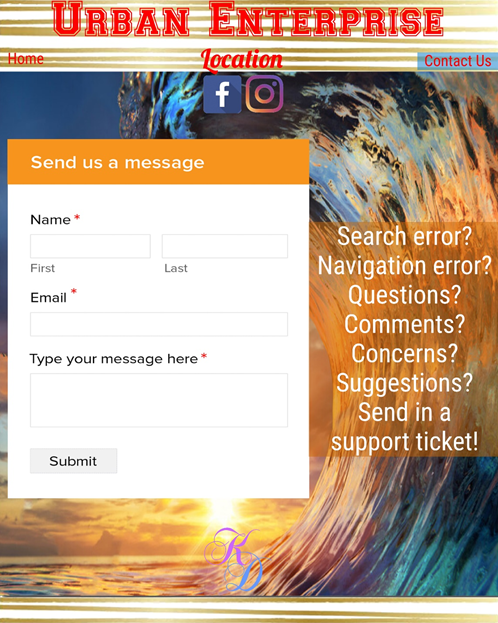
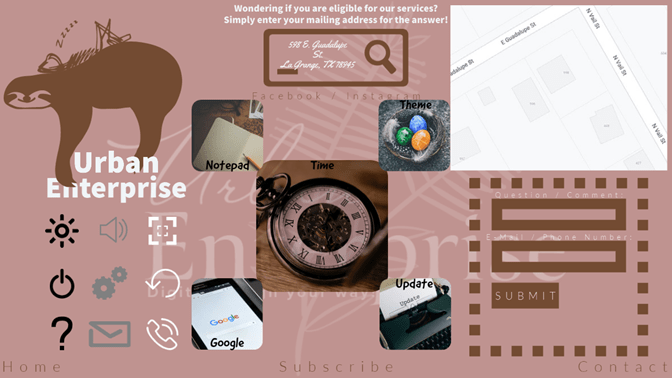
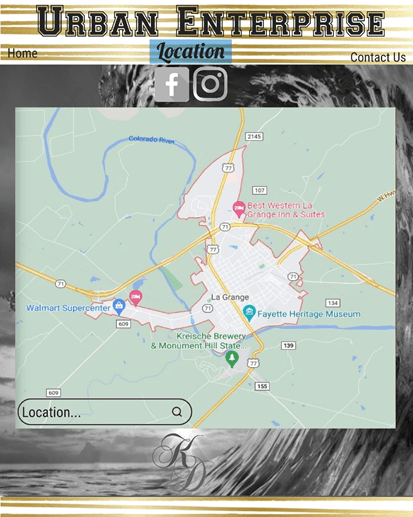
            While I do enjoy sketching, especially when it comes to blueprints or anything of the like, I am aware I am not the best at it which is why I decided to graphically design these prototypes using a favorite online editor. It is likely they have a bit more detail than your typical low – fidelity prototype, but it is hard to avoid that when you graphically design anything. With that in mind, look at page 5 for the first page to the location – based application for a fictional company known as Urban Enterprise, that is known for social media advertising and marketing.

            Just like a website, a web – based application will have a few different pages, usually a home page, about / transaction page, and a contact / support page. The home page of any application or website can be considered the mission statement or application purpose. In this case, there is a broadly – written message of, “Do not wait another moment! Search for your location and find out if your eligible for digital services by Urban Enterprise!” The home page of this application also contains and interactive banner, and two redirection buttons.

Next, we come to the location page of the application which enables the user to search for their home address, since this company only does business within a certain mileage. Once this search is complete, a message will appear in place of the map, stating whether the user is eligible for services or not.

            Normally, any type of application that requires a location search is powered or supported by good maps, android maps, or anything else of the like. In this case, I chose to portray Google Maps because it is an application I trust. To allow this application to work with google maps, there would be a hyperlink or a few lines of coding to allow this transfer of data.

            Finally, a minor change between the pages of the application is color theme. Some would wonder why, and the reason is so there is no question in the mind of the user that they have switched pages within the application.

The last of page of this application is both a contact page and a support page. This page allows a user to send in a form to the company, regardless of whether they have an issue with the application or not. Like most forms, this one requires name, email, and message validation. If any of these spaces are left empty, they application would provide an error message in place of the form, and the user would not be allowed to move forward.

Usability test questionnaire & Guide

Ideally, a usability test questionnaire will be your guide, or areas that you want to test depending on the application you are working with, or the company you are working for. When considering the design of a web application for my own business, my goal is to dissect each faction of the application that a designer would find important. Below is a series of different pages with different content including demographics, usability testing questions, function questions, and a comment / concerns page. The detailed guide for each page is directly below it.

The customized page above is a short, but specific questionnaire regarding the demographics needed for a digital design business. This questionnaire would be easy to complete, taking approximately 5- or 6-minutes total. Towards the bottom of the page, you will notice that the last few questions have a set of options below the answer box; these serve as examples in case there may be some confusion on proper words or numbers.

The usability part of this questionnaire is more extensive, but still generalized in hopes of making it easier to understand. Usability is a broad term that covers a large area of application aspects such as error prevention, navigation, appearance, launch times, accuracy, and more.

When considering error prevention for an application, error messages and recovery are two examples that could serve as answers for methods listed on this part of the questionnaire.

Navigation is the process of going from one page to the next, or one function to the next within the application. When answering this question, you will need to think on the ease or difficulty you have experienced when moving from place to place.

Legible fonts and eye – pleasing color themes both fall under the aesthetics of a web application. If these factors flow together smoothly and cannot be considered an eye sore, the user will likely be pleased with the application.

Launch times are exactly what they sound like but can also be called the start time for an application. If the application takes more than 60 seconds to start up, this part of the questionnaire is likely to have a bad rating.

Map accuracy is the piece of the application that utilizes Google GPS to connect the user to the company through the physical location of the user. If the GPS system is not accurate, the company would likely lose a lot of business or even go bankrupt.

Applications can pass or fail at performance for many reasons, but usually what can make or break them, is how user – friendly they are. Part of being user – friendly is being fully functional on a home computer as well as a mobile device. Still, a more important factor is the transition from one device to the next being a smooth one.

The very last line of the usability questionnaire is asking for a percentage on the overall usability of the application. If the result is less than 50%, the application needs a lot more work. If the result is greater than 50%, there may not be much more to work on depending on where the weaknesses are.

The ratings needed for the functionality of the web application are more specific, but easier to determine with the 5 – star rating system. The questions above each set of stars state what needs to be considered when deciding which rate to give each faction presented.

The easiest part of the questionnaire is the very last page, the comments, or concerns section. This page has no instructions that go with it to allow the development team to freelance their last thoughts on the web application before progressing to further development!

Itemization

Based on previous feedback and the results of the usability test, I do not feel as though there are many major changes that need to be made. However, the minor changes will not be over – looked just because they are minor! The following chart describes the planned changes from start to finish, followed by the usability test results.                                                                                                                                                              

Unit 1Unit 2Unit 3Unit 4
ParaphrasingPrototype ExpansionRewording QuestionsPrototype Borders
Functional Expansion   

Whiles this list of changes may seem very basic, there are a lot of steps involved here. While paraphrasing the direct quotes throughout the text, I hope to learn a little more about the sources I have utilized for the research end of the project. Through functional and prototype expansion, my goal is to embed new applications and features within my own. Finally, through some minor tweaking of appearance and text, there is the hope of making the project that much more visually pleasant.

Usability test results

Demographic Form

There do not seem to be any specific changes that need to be made on the demographic form according to the feedback I have received, however a change I am considering is a different font on the page for the sake of making the form a bit easier to read so there is no miscommunication.

Usability Form

While there are no outright yes or no type questions in this form, what may need to happen is lengthening the questions a bit so that yes or no is not an option for an answer.

Functionality Form

The big change I would like to see happen with the last form is an expansion in size! So, instead of just 5 stars it would be more realistic to have 10 stars, in hopes of the ratings being more diverse! Despite minority, I would also like to change the color of the stars to fit the theme a bit better!

The result / goal of my web – based application would be allowing the user to fill out the starting form with their demographics. Based on the information given, they would be approved or denied digital service. The determining factor would be location, and depending on services needed, probably age as well.

Current changes and Future Development

While the changes of this over-all project may have been more extensive than I predicted, I am happy with the final result. It all goes back to a saying I was told years ago, “No matter the size, a change is a change.” I kept my focus on the prototypes because I felt that was the area that needed the most work. When the initial prototypes were designed, I was thinking on a zoomed – in basis, however after I took some time to digest structured feedback and looked at various samples, I realized I was thinking about a user interface for this particular project the wrong way. So, I decided to remake the design using my phone’s home screen as a guide.

Trending technologies in media transformation

Each year media trends change, and the media trends that remain dominant within society have changes and updates within them. Throughout my research, I found a list of four trending changes that are common among almost all types of media including mobile media: VR/AR, device – specific content, voice / chat capabilities, and interactivity.

VR/AR

This function enhances a user’s experience, usually by making the content 3 – D. A few facilities that have embraced this technology include electronic departments / stores, movie theatres, and graphic design companies / individuals.

Device – Specific Content

There are several, solid examples that come to mind when I think of anything being device – specific. A few companies that carry the same content from one device to the next include Netflix, Hulu, Discovery +, Pandora, Disney +, and more!

Voice & Chat

Skype, Facetime, MSN, Zoom, and Remind are all examples of applications that have embraced voice and chat capabilities in recent years, and will only perform better in years to come!

Interactivity

Interaction within applications has been one of our main points of study throughout the progression of this course and is vital in everyday life. It has changed the way we look at and utilize media since I was a child from simple buttons to complex websites.

changing social media through technology

Social media is updated and changed on a regular basis by means of technology. The diverse ways combined with the speed of the changes have made social media remarkable to say the least, and while some would say it is a drain on society I can very much beg to differ! Below is a detailed list of technologies that have impacted and continue to impact social media every day!

Artificial Intelligence

AI has been used in the creation of automated marketing through social media.

VR/AR

Virtual and Augmented reality has been called the futuristic technology of today!

Bots & the Like

Bots are being used more and more to enhance communication between business and buyer!

References

  1. Editor. (2019, October 18). Functional and nonfunctional requirements: Specification and types. Retrieved May 18, 2021, from https://www.altexsoft.com/blog/business/functional-and-non-functional-requirements-specification-and-types/
  2. Interactive system design in human computer INTERFACE tutorial 18 May 2021 – Learn interactive system design in human computer INTERFACE Tutorial (25596): WISDOM Jobs India. (n.d.). Retrieved May 18, 2021, from https://www.wisdomjobs.com/e-university/human-computer-interface-tutorial-2374/interactive-system-design-25596.html
  3. Isakova, T. (2020, September 23). What are technical specifications and why to have them for your project. Retrieved May 18, 2021, from https://theappsolutions.com/blog/development/reasons-to-have-technical-document/
  4. Ghanem, E., & Sundararaju, M. (2020, March 26). Four technologies that are transforming media and events. Capgemini Worldwide. https://www.capgemini.com/2020/03/four-technologies-that-are-transforming-media-and-events/ .

XYZ Firm: Research Project

Started 3/30/2021 – by Kristi Divin CTU – Online – Course: IT175

Section 1: Introduce Cloud Computing

Saving Cost

  • Human Resources
  • Supply Chain
  • General Office Function

Topics to Consider

  • Speed of Deployment
  • Costs
  • Service Offerings
  • Elastic Scaling
  • Vendor Lock – In

Cloud Type

  • Public
  • Private
  • Community
  • Hybrid

Section 2: Software & Identity as a Service

  • Identify at least 1 SaaS provider that can provide services for basic office administration and collaboration functions like Web mail, messaging, document sharing, and project management.
  • Identify at least 1IDaaS provider that may be used to provide identity services for the existing on-premises services (human resources and supply chain) and possibly the soon-to-be-hosted SaaS solution, which will provide for basic office administration and collaboration functions.
  • Once you have identified the SaaS and IDaaS providers, provide some analysis on their offerings and advantages. Finally, provide a high-level plan for migration that includes the tasks to be done, risks with risk mitigation, and risk management.

Section 3: Service Oriented Architecture & Platform as a Service for Supply Chain

  • Research 1 Platform as a Service (PaaS) provider and identify why it may be considered as a potential PaaS provider for the current supply chain program.
  • Identify potential benefits and risks that may be unique to the PaaS provider.
  • Include in your analysis a general discussion on budgeting considerations.
  • Include a summary that details the PaaS provider that you would select, with justification.

Section 4: Research 1 IaaS Vendor

  • Virtualization
  • Scaling and storage
  • Clustering

Section 5: Security, Risk Management, and Governance

  • Security threats in cloud-based solutions with risk management strategies
  • Governance principles for cloud-based solutions
  • Identify management opportunities in the cloud

“Cloud is about how you do computing, not where you do computing.”

Paul Maritz, CEO of VMware

Introducing Cloud Computing to a New Business

   Since the method of cloud computing is a completely new area of study for me, I decided most efficient way to help me understand it is to begin implementing it into my own business which offers services of graphic design and web development.

   Cloud computing is defined as being an “On-demand availability of computer system resources, especially data storage (cloud storage) and computing power, without direct active management by the user.” (Wikipedia, 2021)

Saving Cost

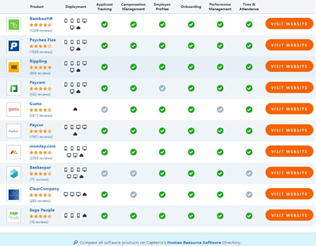
   Because it is something that the user does not regularly manage, there are several ways for it to save on expenses for a business like mine that is just starting out. The first of which is using tools of cloud human resource management, and Capterra has a very precise list of software applications for HR that were rated as the top 10 last year. Look at the graph below for the names of the applications, and the services they provide!

Monday.com is the marketing tool on this list that captures my interest strongly, because not only is it capable of helping me save on costs but is a software platform that engages designers in the ways of supply chain management and general office function as well!

Supply Chain Management

   There are several ways to efficiently manage a supply chain in any given business, but how does supply chain management help with saving cost within the realm of cloud computing?

   Upon further research, I discovered that Monday.com is cloud compatible which means I can finalize my entire project’s budget from start to finish using this application without using a bunch of excess storage space on my computer, tablet, or phone.

General Office Function   

If I, or any business owner, were to push all general office function to a third – party application such as Monday.com it would take less time, resources, and finances to manage the functions of the general office because that would fall under the duties of the third – party. In turn, the finances that would have gone to the excess resources would instead be one small, monthly payment to Monday.com for its services of general office function management. Some of functions of the general office include, “Duplicating, mailing and procurement of equipment for other departments.” (A. Acharya, 2011)

Topics to Consider

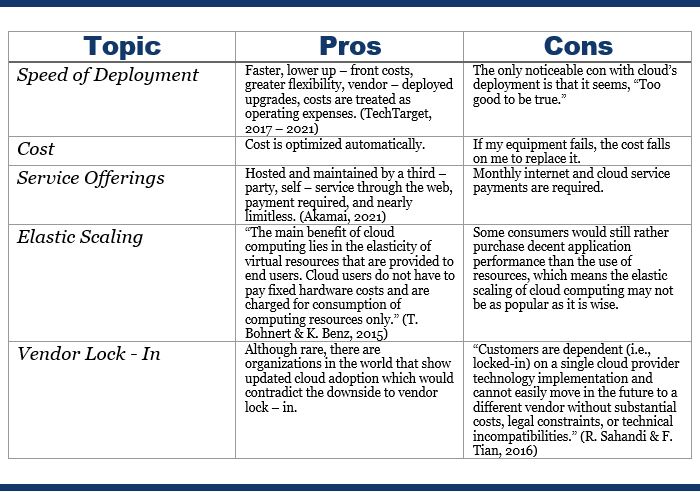
   A few topics to consider when thinking about cloud computing include the speed of deployment, costs, service offerings, elastic scaling, and vendor lock – in. Look at the chart below for a detailed list of pros and cons to each topic!

As with any process, pros and cons are important factors to consider. Which is why I dug into pros and cons that specifically match each of these topics to cloud computing.

Cloud Type

   With all the resources I have investigated, and with what I have learned combined with personal experience the only type of cloud computing I would feel comfortable using would be private. Community and Public Cloud Computing do not make sense for a web designer, because it would give a lot of people access to my coding and any design templates I choose to utilize. In turn, this would make my work very vulnerable to theft and different types of cyber-attacks. I put myself at risk to these threats enough as it is by simply signing into my WordPress account to post my blogs and pictures. With Private Cloud Computing, I feel as though I would have better control of who accesses my work, when, and why.

References

  1. Cloud computing. (2021, April 03). Retrieved April 06, 2021, from https://en.wikipedia.org/wiki/Cloud_computing
  2. Human resource software. (n.d.). Retrieved April 06, 2021, from https://www.capterra.com/sem-compare/human-resource-software?gclid=CjwKCAjwjbCDBhAwEiwAiudBy8aTXiD-H0NLwjNcJH7yzgYRDFH0xzw3aiIf1ec8c_ul7lwtgUGgchoCj3cQAvD_BwE
  3. What are the common functions of a general office? (2011, January 06). Retrieved April 06, 2021, from https://www.preservearticles.com/business/common-functions-of-a-general-office/1195
  4. Work the way that works for you. (n.d.). Retrieved April 06, 2021, from https://monday.com/
  5. Benz, K., & Bohnert, T. (2015, October 08). Elastic scaling of cloud application performance based on Western Electric rules by injection of Aspect-oriented Code. Retrieved April 07, 2021, from https://www.sciencedirect.com/science/article/pii/S1877050915030239
  6. Cloud computing costs & pricing comparison for 2021. (2021, March 16). Retrieved April 06, 2021, from https://vnt-software.com/cloud-computing-costs-and-pricing-comparison/
  7. Opara-Martins, J., Sahandi, R., & Tian, F. (2016, April 15). Critical analysis of vendor lock-in and its impact on cloud computing migration: A business perspective. Retrieved April 07, 2021, from https://journalofcloudcomputing.springeropen.com/articles/10.1186/s13677-016-0054-z
  8. Player, S. (2013, July 15). Using the cloud for rapid deployment OF Fp&a technology. Retrieved April 06, 2021, from https://searcherp.techtarget.com/feature/Using-the-cloud-for-rapid-deployment-of-FPA-technology
  9. Security, cloud delivery, performance | akamai. (n.d.). Retrieved April 7, 2021, from https://www.akamai.com/

SaaS Providers

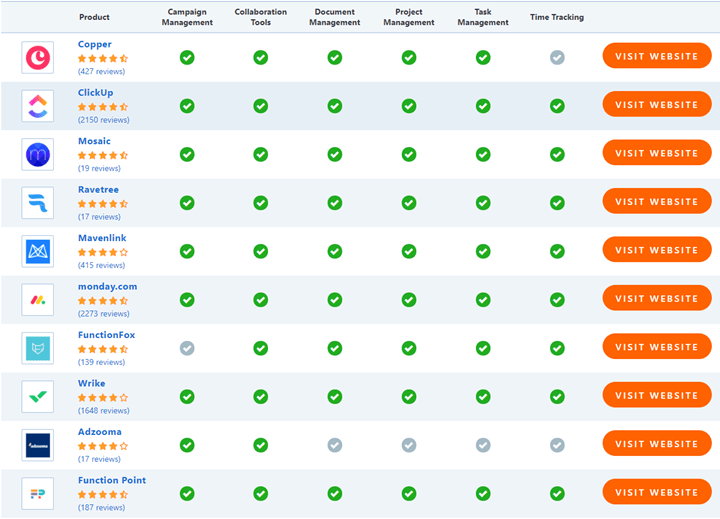
   The chart above is a list of the top 10 marketing providers according to Capterra. I chose to discuss this list after looking it over because between this list and the first one already revealed there is one provider in common: Monday.com, which tells me that this application can accomplish a lot more than mere finances. Capterra does a wonderful job at explaining just what Monday.com can do, the ratings it currently holds, as well as a directly link to the originating website, and the main services it provides.

   To clarify my suspicions about Monday.com I performed a simple google search using, “Basic office administration and collaboration,” as the key words and this specific application was the first one listed! The listing’s description according to Google is, “Task Management, File Sharing, Real-Time Communication & More. Try monday.com Free Today! A Tool That Lets Everyone Easily Share What They’re Working On. Start Collaborating Now! File Sharing. Reminders & notifications. 24/7 Legendary Support. Due Date Reminders.” (Google, 2021)

   While there may not be a chat bubble on the bottom of the website’s page, there are different options to contact the support team for Monday.com, which may come in handy if things go astray or a faction within the provider’s duties is not working properly.

IDaaS Provider

   After some research, I was able to find a top – 10 list of IDaaS vendors for last year provided by a technology blog known as “KnowledgeNile.” From the originating list, I navigated to a vendor I am already familiar with: “Oracle Identity Cloud Service.”

   According to this blog, Oracle Identity Cloud Service provides, “Easy and synchronized user provisioning across Cloud and on-premises services. It enforces a zero-trust strategy and implements single sign-on, multifactor authentication, and strong password enforcement in their access policies.” (KnowledgeNile, 2020)

Offerings and Advantages

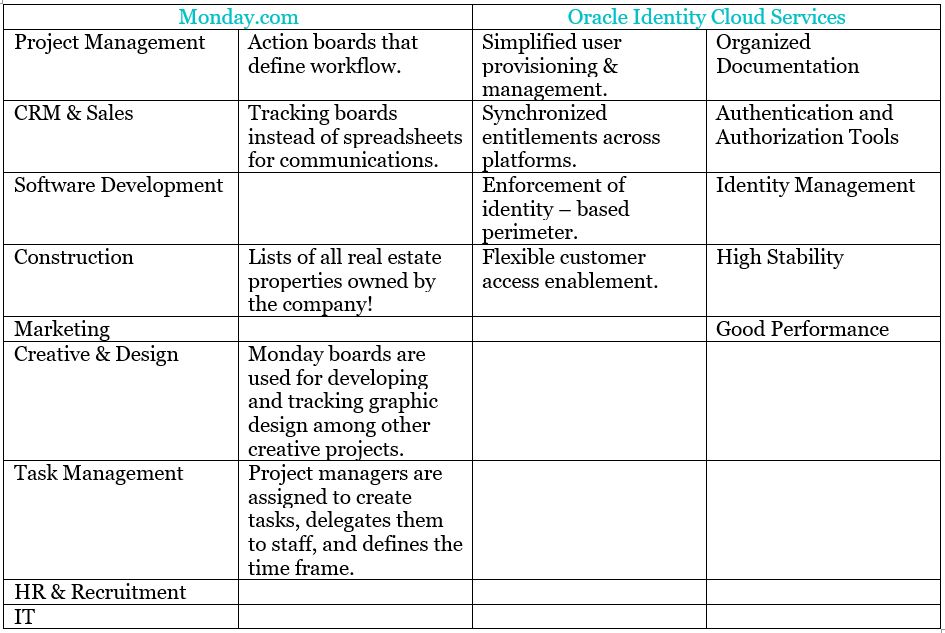
   With everything I have learned with throughout my research, it is obvious there are several advantages to both applications. To put it on paper though I decided to research further and find specific lists of advantages for Monday.com and Oracle Identity Cloud Services.

   The chart below explains what both chosen applications have in the ways of services and advantages. Reading the chart from left right, the far – left column are services provided by Monday.com followed by the application’s advantages; the organization for the Oracle Identity Cloud Services is the same, just with the appropriate information. 

Plan of Action

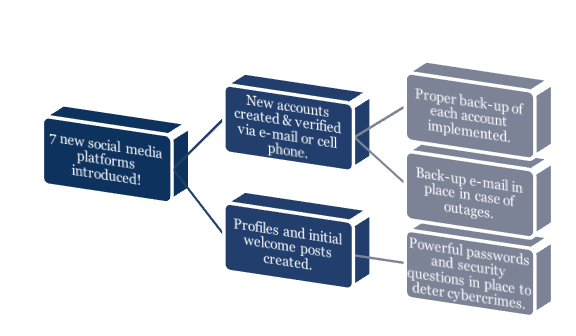
Below you will see a flow – chart that serves as a plan of action for Urban Enterprise, my private business. Part of this plan, in fact, has already been implemented as of 4/13/2021 which is the introduction of new social media platforms to broaden the advertisement of the business.

This chart includes all the steps I need to pursue to see that my business is well – protected, and thanks to this project I have discovered new resources that can help me get all this accomplished!

References

  1. Advertising agency software. (n.d.). Retrieved April 14, 2021, from https://www.capterra.com/sem-compare/advertising-agency-software?gclid=Cj0KCQjwpdqDBhCSARIsAEUJ0hMz_PqnrVgo0CEzMFyySlkN65HI-oP4nfZpYNj6o8N5Bz7I34iZtPUaAvK3EALw_wcB
  2. Bruce, D., About Debra Bruce Debra Bruce is an experienced “Tech-Blogger” and a proven marketer. She has expertise across topics like artificial intelligence, Bruce, A., Debra Bruce is an experienced “Tech-Blogger” and a proven marketer. She has expertise across topics like artificial intelligence, & View all posts by Debra Bruce →. (2021, February 12). 10 best IDaaS vendors as of 2020. Retrieved April 14, 2021, from https://www.knowledgenile.com/blogs/idaas-vendors/
  3. Home. (n.d.). Retrieved April 15, 2021, from https://www.itcentralstation.com/products/oracle-identity-cloud-service-pros-and-cons
  4. Oracle identity cloud service. (n.d.). Retrieved April 15, 2021, from https://www.oracle.com/security/cloud-security/identity-cloud/
  5. Santos, J. (2019, December 12). The pros and cons of using monday.com software. Retrieved April 15, 2021, from https://articlesbase.com/the-pros-and-cons-of-using-monday-com-software/
  6. Work the way that works for you. (n.d.). Retrieved April 14, 2021, from https://monday.com/
Section 3


1)  Research 1 Platform as a Service (PaaS) provider and identify why it may be considered as a potential PaaS provider for the current supply chain program.

If I had to pick a PaaS that I felt would benefit my trade efficiently it would be the one in which I am most familiar: Google App Engine! There is a wonderful article written and published by DevTeam.Space that describes the capabilities of Google App Engine and how it functions. As stated by the article, “With Google App Engine, you develop, deploy, and manage your applications on a fully managed cloud platform.” (DevTeam, 2021)

Google App Engine is not only efficient to me as a PaaS but also as a possible partner to my business since there is already so much I utilize within the company. For example, Google is utilized regularly as a base – source for any questions I may have when researching tasks big or small. I utilize Google Play Store for installing applications that are mobile and designer friendly, most of which are desktop friendly as well. On a minor, but relevant, side – note I also use Google Music to find family – friendly music or E-Books for my children.

2) Identify potential benefits and risks that may be unique to the PaaS provider.

There are two unique benefits to Google App Engine, that really drive my selection home! The first of which is me not having to concern myself about infrastructure provisioning as a programmer! This fact alone, would be capable of saving a lot of time and stress. Aside from that, Google would also handle the process of scaling for the company.

The second deciding factor is this platform supporting nearly even known programming languages such as Java, Python, PHP, Ruby, etc. Since my trade of choice is primarily coding, this would be a huge help. To read more on Google App Engine, look at the cited resource below this section.

3) Include in your analysis a general discussion on budgeting considerations.

Probably the largest benefit of Google as a business partner or provider is that the tools virtually free to use! There are several instances where upgrading is an option, of course, but it is never required for anyone to access and utilize the tools which means a lot to anyone in the digital business!

4) Include a summary that details the PaaS provider that you would select, with justification.

As previously stated, a lot of what is discussed in this section is justified by me already being familiar and accustomed to using the vast array of tools and resources that Google provides, from e-mail to photo editing. I have used Google for a large variety of things over the years and will continue to do so if it remains active!

References

10 top PAAS providers of 2021. (2021, March 15). Retrieved April 21, 2021, from https://www.devteam.space/blog/10-top-paas-providers/

Section 4

Introduction to Microsoft Azure

I chose to research Microsoft Azure simply because Microsoft is a brand I am familiar with and very fond of using. Another side note is that since Microsoft is the base software to most technology it is usually easy to register a given device with the company, which can greatly add to the security and support factors.

Virtualization

Microsoft defines virtualization as, “A situation in which a simulated computing environment is created instead of a physical one.” (Microsoft, 2021) Within the marketplace for Microsoft Azure there is a virtualization manager which manages the virtual infrastructure, optimizes performance, fixes any issues, and controls the resource scope.

Scaling & Storage

A few of the different scaling resources offered by Microsoft Azure include API management, batch, Azure Database for MariaDB, Azure Policy, Azure Bot Services, and Azure SignalR Service. There are also a few web applications included with the products offered which are known as Virtual Machine Scale Sets, Queue Storage, and Azure Batch Al. In addition to all this, there are different levels of each agile platform offered by Microsoft Azure such as scale – out models and blockchain scaling.

Some of the aspects maintained by the storage faction of Microsoft Azure include accounts, explorer, archives, data lake, premium files, azure blob, and azure disk. The most efficient benefit to everything is that there are no upfront costs for any services provided by Microsoft Azure, in fact, the only time you must pay a dime is when you choose to!

Clustering

While there may not be as many products offered for the clustering process, that does not mean they are any less useful. HDInsight for example is the perfect tool for managing a lot of data when the user needs an open – source platform. A few platforms HDI supports include Apache Hadoop, Spark, Hive, Kafka, and others.

The second product on the list of clustering models is Azure CycleCloud which provides more than a few services including the deployment of clusters and additional resources, computing VM’s, storage, networking, and cache.

Finally, there is a tool called Azure FXT Edge Filer which is known as, “A hybrid storage optimization solution for HPC environments.” (Microsoft, 2021) FXT is unique because it does not work with hardware storage, but network – attached storage too which means you would have the cloud anywhere you go under a single e-mail address!

ReferencesCloud computing Services: Microsoft Azure. (n.d.). Retrieved April 29, 2021, from https://azure.microsoft.com/en-us/

Security Threats

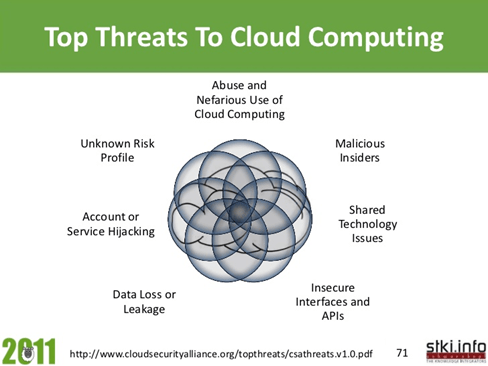
The diagram above details a list of the top 7 threats to cloud computing within the year of 2011! Despite this list being older, each threat is still real and sometimes carried out unnoticed or unreported until after the crime has already been committed, by which time there may be very little to nothing that can be done. That said, I decided the best way to research risk management for threats like these was to decide on prevention policies.

  • Nefarious use of cloud computing.

The best possible way to fight hackers and cybercrime from using information the wrong way is to partner with a cloud provider that prides on high security, one that is known for having a strong IDS and/or IPS, utilizes firewalls wherever possible, has cloud monitoring and balancing tools, and utilizes fraud prevention methods.

  • Unknown Profiles & Account or Service Hijacking

“Identity and Access Management is role-based accesses to applications and files.  Securely isolating users to only allow access to information pertaining only to them and their role within the organization.” (WHOA.com, 2020)

  • Data loss or leakage.

The top 3 ways to prevent data breaches are outer and inner firewalls, utilizing encryption when your data is idle, and authentication for data access always!

  • Insecure interfaces or API’s.

“To limit the severity of this risk, it’s important to treat APIs and UIs as the first line of defense for any cloud solution. Threat modeling applications and systems, including data flows and architecture/design become important parts of the development lifecycle under this philosophy.” (WHOA.com, 2020)

  • Shared Technology Issues

From personal experience, I feel as though the best way to prevent shared technology issues is to limit doing so. This way you will be better able to keep any account information to yourself. You will also be able to protect any company or personal data you may have stored.

  • Malicious Insiders

Some prevention methods against malicious insiders include the revoking of credentials upon termination, restricting access where possible on certain levels, and utilizing firewalls for individual people and applications.

Governance Principles

CloudHealth Tech is a technology – based blog published in June of 2019 that specializes in cloud – based solutions. As such, they have an article that digs into 6 of the most important governance principles including financial management, cost optimization, operational governance, performance management, security and incident management, finally asset and configuration management. This 4 – minute read article gives a brief description of each step of cloud computing governance and why they are important! There are also services this company provides to make sure businesses thrive in all these aspects and more.

The biggest management opportunities within cloud computing lie with the technologies used to perform the vast array of services at hand! It so happens that Rachel Dines, a senior director and writer of product marketing for CloudHealth Tech, published an article on this topic in January of 2021! This article lists different ways 2020 has changed cloud usage, and what has happened to implement the changes which includes computing costs decreasing, cloud services finally proving themselves valuable, and cloud computing is setting up to be as important as cost management come the end of 2021.

“2020 was a year like no other. The COVID-19 pandemic and subsequent government-imposed restrictions introduced new realities for everyone. For some businesses, the economic pressure of these restrictions would make cost-cutting measures the top priority. For others, the implications of the pandemic led to a fundamental shift in priorities, whether that meant a surge in demand for core products or the need to respond to unexpected behavior in the market.” (R. Dines, 2021)

References